
Sixth Sunday of Easter
The United Church of Santa Fe
10 o’clock Service
[Appointed readings follow the Homily.]
+ In nomine Domini. Amen.
Three short phrases —
We see them every Sunday morning. We observe them each time we pass by the property of this congregation. They are on the masthead of the Newsletter, we find them consistently in the Sunday Bulletin. We voice them frequently when we think of this community of faith into which we find ourselves. These words have shaped and molded and defined the Ministry which you and I have!
Love God.
Love Neighbor.
Love Creation.
Do you know where the concept of caring for others in a socio-economical manner began? It was in the 16th Century.
Love God.
Love Neighbor.
Love Creation.
We all know about the Reformation, and Martin Luther, and the “95 Articles for Debate” against the Sale of Indulgences by the Church in order to fund the massive Budget in Papal Rome.
But, what is so often forgotten is that the Reformation had to do with more than just “theological and ecclesiastical debate” — it had to do with life.
There is a great book which I highly recommend to you, written by someone who was a Professor of Ethics when I attended Susquehanna University (his name is Carter Lindberg) and it is a summary of articles from a gathering of scholars and became known as The Forgotten Luther: Reclaiming the Social-Economic Dimension of the Reformation.
This is a timely piece and it speaks to the “three phrases” with which I began this Sermon. [Our own Dr. Larry Rasmussen has a wonderful endorsement of this book.]
What happened in Germany in the 16th Century was not just a “religious” thing, if you will, it was an addressing of the total-human-situation and the plight of those for whom life was not quite the same as the elite or wealthy.
In our Gospel Reading this morning, the Story is remembered by the Compilers of the Gospel we know as JOHN so that there is a meeting of Jesus with his followers. IN it, Jesus becomes a servant washing the feet of his friends. In this Story Jesus then takes into his own self the posture of someone who serves and tells them that just as he has stooped down before them to wash their feet so they should now become those who engage in acts of loving-kindness to each other and to those around them.
Love God. Love Neighbor. Love Creation.
Here is today’s Word: We find it through the Bible. In the Hebrew Scriptures is it אַהֲבָה (ahavah love); and in the Christian Scriptures it is αγαπη “love.”
But this Greek word is rather specific in its meaning: it is love which is not centered in the person who is doing the loving, but rather in the “other.” It is self-LESS love.
For example, in the story of the “Good Samaritan” known to all of us, what happens is that the “heart of the Samaritan is moved beyond”1 the self-interest and protection of the Samaritan toward the person who is lying wounded in the ditch. And the movement is without condition. Αγαπη.
Over the years this little word has become popular in the Church. We have agape meals, we have agape gatherings, all sorts of things. IN fact when Beverly and I were married we made a “banner” with the words in Greek ειρηνη και αγαπη “Peace and Love.” Beautiful is was, beautiful it is.
In the reading we have this morning from the Storyteller of Jesus we call John, the word appears no less than ten times. It is central, we can say it is essential to the Story.
The Story of Jesus, the Story to which you and I are attached by our faith, by our trust, by our belief — is dependent not upon our own vainglorious determination of our selves; but upon our being pushed, nudged, pulled (even) to the plight and need of the Other.
[I pause to comment upon the word “vainglorious.” I came across it when reading one of the pages of The Theological Dictionary of the New Testament, by Gerhard Kittel — ten volumes which once acquired in Seminary, I’m not certain I could every afford them again.
Vainglorious is the complete and opposite of what is proclaimed and expected in this reading and [we must remember always, always!] in the life of those who follow Jesus. Vainglorious describes someone (and those) whose words are empty and without substance, and who are politically and ethically on the opposite of the wall from we are who trust in Jesus when we say that we are here in this world to “Love God, Love Neighbor, Love Creation.”
[I should probably stop there.]
Frederick Danker, the brilliant Biblical and Greek Scholar said, “If you think of God, then you think of Love.” That is who God is. Love.
We cannot say, we love God and then act in ways that do not love our neighbor. We cannot keep the world and its suffering at arm’s length. We can’t impersonally study it and intellectually analyze it. It must not be avoided or denied by withdrawal.
It reminds me of a time when a Synod of my Lutheran Church decided to gather a committee on “The Holy Spirit.” “Is not,” I happened to offer, “Doing this just the very thing that would eliminate “Spirit”? To have a Committee?”
I was not asked back to the conversation.
You see, we cannot say that we love God and then ignore the needs of those around us.
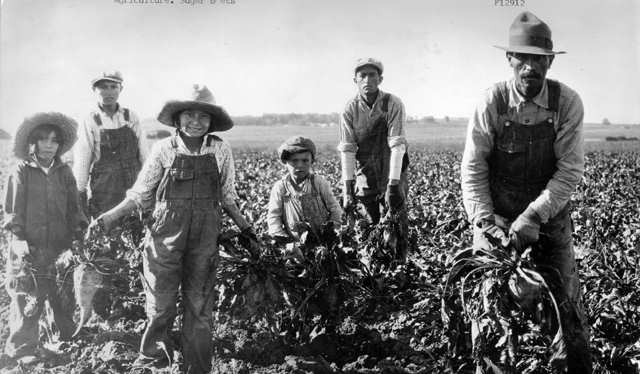
It was 1971 and I was an Intern in the Swedish-American Lutheran Church in Ault, Colorado (a lovely town about 60 miles north of Denver). The Story Therein is for another time It was a wonderful, penetrating, healing and challenging experience.
One afternoon, my friend Kirk Wickersham (who actually looked like my brother because of our then flaming red hair both of us) called me up and said, “Ben, put on your collar and come down to Greeley right now. We are going to march with the Farm Workers.”
Now Kirk was an Attorney (first in his class at Yale, by the way) who was bi-lingual English and Spanish. And he was working with Colorado Rural Legal Services (CRLS).
So, I put on my clerical-collar, my best pair of bluejeans and went to Greeley.
We joined the march of the farm-workers, a portion of the political movement called La Raza (the people).
In the very front were two people carrying a Banner. Next were three people: myself on the left, Kirk in the middle, and on the right the local organizer of the Farm Workers.
We marched. We sang. We chanted.
¡Viva la Raza!
¡Que Viva La!
And on the Evening News of the Denver TV station, there was the video of the march with this Lutheran Pastor hand raise high in a fist saying ¡Que Viva La! It’s where I learned that in Protests and Marches the “Camera” always looks for someone in a collar (or at least that was so in the 1970s).
That Sunday the good Swedes (most of them farmers, most hiring migrant workers) came up to me and in true Scandinavian fashion said, “Pastor, we saw you on the evening news.”
“Yes,” I said, “and I will next week talk about all this in my Sermon.”
And, I did. I mentioned that the field workers from Mexico had a difficult life, as they worked the sugar-beet fields for many of our members. A neighbor (just west of the congregation [not a member, but known by everyone] “housed” his “workers” in a silage-pit, a hole dug into the earth, covered with beams and tar-paper — no running water, no sanitation, no nothing — 12 families who were — in the parlance of the area — given derogatory names and titles.
I said that the crop duster whom everyone knew was rather famous for flying low over the acres of corn and then just “slide-slipping” over the families (grandparents, parents, children) who were the “stoop workers” in the sugar-beet fields and “spraying them.”
Oops.
And I said, as this Gospel says, “Your should love your neighbor as yourself.”
I remember very few of the Sermons I have preached. But that day, in Ault, Colorado, in 1971, having been witnessed on TV, I said, “How can you say you love God and do this to your neighbors?”
One of the members of the congregation (and dear friends of ours) came up afterward and said to me, “You’re absolutely right. We need to change this. What can we do?”
And slowly, every slowly we began to make changes!
My Sisters and My Brothers: The life of the Gospel is “low and slow.” But it is the Gospel. It is that to which you and are are summoned, called, beckoned, maybe even hauled!
So, there we are today. We have the Story. We have the command. We have the field of opportunity before us.
Let us begin.
Let us begin now.
And, let us say: AMEN.
1Kittel, page 46
John 13.1-9
1 Πρὸ δὲ τῆς ἑορτῆς τοῦ πάσχα εἰδὼς ὁ Ἰησοῦς ὅτι ἦλθεν αὐτοῦ ἡ ὥρα ἵνα μεταβῇ ἐκ τοῦ κόσμου τούτου πρὸς τὸν πατέρα, ἀγαπήσας τοὺς ἰδίους τοὺς ἐν τῷ κόσμῳ, εἰς τέλος ἠγάπησεν αὐτούς.2 καὶ δείπνου γινομένου, τοῦ διαβόλου ἤδη βεβληκότος εἰς τὴν καρδίαν ἵνα παραδοῖ αὐτὸν Ἰούδας Σίμωνος Ἰσκαριώτου,3 εἰδὼς ὅτι πάντα ἔδωκεν αὐτῷ ὁ πατὴρ εἰς τὰς χεῖρας καὶ ὅτι ἀπὸ θεοῦ ἐξῆλθεν καὶ πρὸς τὸν θεὸν ὑπάγει,4 ἐγείρεται ἐκ τοῦ δείπνου καὶ τίθησιν τὰ ἱμάτια, καὶ λαβὼν λέντιον διέζωσεν ἑαυτόν.5 εἶτα βάλλει ὕδωρ εἰς τὸν νιπτῆρα καὶ ἤρξατο νίπτειν τοὺς πόδας τῶν μαθητῶν καὶ ἐκμάσσειν τῷ λεντίῳ ᾧ ἦν διεζωσμένος.6 ἔρχεται οὖν πρὸς Σίμωνα Πέτρον. λέγει αὐτῷ, Κύριε, σύ μου νίπτεις τοὺς πόδας;7 ἀπεκρίθη Ἰησοῦς καὶ εἶπεν αὐτῷ, Ὃ ἐγὼ ποιῶ σὺ οὐκ οἶδας ἄρτι, γνώσῃ δὲ μετὰ ταῦτα.8 λέγει αὐτῷ Πέτρος, Οὐ μὴ νίψῃς μου τοὺς πόδας εἰς τὸν αἰῶνα. ἀπεκρίθη Ἰησοῦς αὐτῷ, Ἐὰν μὴ νίψω σε, οὐκ ἔχεις μέρος μετ’ ἐμοῦ.9 λέγει αὐτῷ Σίμων Πέτρος, Κύριε, μὴ τοὺς πόδας μου μόνον ἀλλὰ καὶ τὰς χεῖρας καὶ τὴν κεφαλήν.
Now before the festival of the Passover, Jesus knew that his hour had come to depart from this world and go to the Father. Having loved his own who were in the world, he loved them to the end. 2The devil had already put it into the heart of Judas son of Simon Iscariot to betray him. And during supper 3Jesus, knowing that the Father had given all things into his hands, and that he had come from God and was going to God, 4got up from the table, took off his outer robe, and tied a towel around himself. 5Then he poured water into a basin and began to wash the disciples’ feet and to wipe them with the towel that was tied around him. 6He came to Simon Peter, who said to him, ‘Lord, are you going to wash my feet?’ 7Jesus answered, ‘You do not know now what I am doing, but later you will understand.’ 8Peter said to him, ‘You will never wash my feet.’ Jesus answered, ‘Unless I wash you, you have no share with me.’ 9Simon Peter said to him, ‘Lord, not my feet only but also my hands and my head!’ [NRSV]
r
John 15.9-17
9 καθὼς ἠγάπησέν με ὁ πατήρ, κἀγὼ ὑμᾶς ἠγάπησα· μείνατε ἐν τῇ ἀγάπῃ τῇ ἐμῇ.10 ἐὰν τὰς ἐντολάς μου τηρήσητε, μενεῖτε ἐν τῇ ἀγάπῃ μου, καθὼς ἐγὼ τὰς ἐντολὰς τοῦ πατρός μου τετήρηκα καὶ μένω αὐτοῦ ἐν τῇ ἀγάπῃ.11 Ταῦτα λελάληκα ὑμῖν ἵνα ἡ χαρὰ ἡ ἐμὴ ἐν ὑμῖν ᾖ καὶ ἡ χαρὰ ὑμῶν πληρωθῇ.12 αὕτη ἐστὶν ἡ ἐντολὴ ἡ ἐμή, ἵνα ἀγαπᾶτε ἀλλήλους καθὼς ἠγάπησα ὑμᾶς·13 μείζονα ταύτης ἀγάπην οὐδεὶς ἔχει, ἵνα τις τὴν ψυχὴν αὐτοῦ θῇ ὑπὲρ τῶν φίλων αὐτοῦ.14 ὑμεῖς φίλοι μού ἐστε ἐὰν ποιῆτε ἃ ἐγὼ ἐντέλλομαι ὑμῖν.15 οὐκέτι λέγω ὑμᾶς δούλους, ὅτι ὁ δοῦλος οὐκ οἶδεν τί ποιεῖ αὐτοῦ ὁ κύριος· ὑμᾶς δὲ εἴρηκα φίλους, ὅτι πάντα ἃ ἤκουσα παρὰ τοῦ πατρός μου ἐγνώρισα ὑμῖν.16 οὐχ ὑμεῖς με ἐξελέξασθε, ἀλλ’ ἐγὼ ἐξελεξάμην ὑμᾶς καὶ ἔθηκα ὑμᾶς ἵνα ὑμεῖς ὑπάγητε καὶ καρπὸν φέρητε καὶ ὁ καρπὸς ὑμῶν μένῃ, ἵνα ὅ τι ἂν αἰτήσητε τὸν πατέρα ἐν τῷ ὀνόματί μου δῷ ὑμῖν.17 ταῦτα ἐντέλλομαι ὑμῖν, ἵνα ἀγαπᾶτε ἀλλήλους.
r
9As the Father has loved me, so I have loved you; abide in my love. 10If you keep my commandments, you will abide in my love, just as I have kept my Father’s commandments and abide in his love. 11I have said these things to you so that my joy may be in you, and that your joy may be complete.
12 ‘This is my commandment, that you love one another as I have loved you. 13No one has greater love than this, to lay down one’s life for one’s friends. 14You are my friends if you do what I command you. 15I do not call you servants any longer, because the servant does not know what the master is doing; but I have called you friends, because I have made known to you everything that I have heard from my Father. 16You did not choose me but I chose you. And I appointed you to go and bear fruit, fruit that will last, so that the Father will give you whatever you ask him in my name. 17I am giving you these commands so that you may love one another. [NRSV]
r
9“In the same way the Father loves me, I have loved you. Never stop walking this road of love. 10By doing what the Father has told me, I have remained in his love. 11As you walk in my ways, my love will remain in you. I am saying this so your hearts will be filled with the same joy I have.
12“To walk the road with me, you must love each other in the same way I have loved you. 13There is no greater way to show love to friends than to die in their place. 14You are my friends if you walk in my ways and do what I say. 15I no longer see you as my servants but as friends. Masters do not share their hearts and plans with their servants, but I have shown you everything I have heard from my Father.
16“You may think you chose me, but I am the one who chose you. You are my new garden where I will grow a great harvest of my love—the fruit that remains. When you bear this fruit, you represent who I am—my name. Then the Father will give you whatever you ask for. 17I am telling you this so you will walk the road of love with each other. [FIRST NATIONS VERSION]
 Nota(ble) Be(n)e